A Between-Sessions Routine for Tennis Kit
A between-sessions routine for tennis kit helps you air damp gear, sort reusable items and store equipment sensibly, so sound kit stays ready for play.
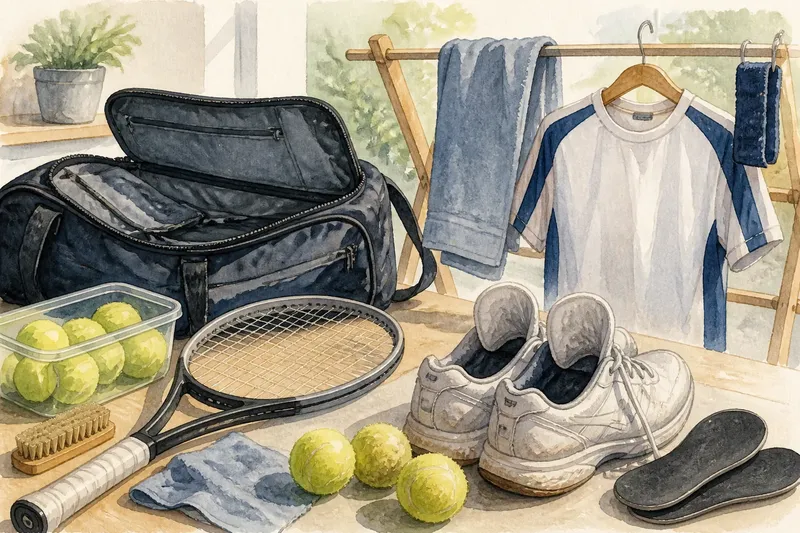
What should you do with tennis kit after a session so it is ready for next time without replacing sound equipment? A between-sessions routine for tennis kit starts by separating damp items, then checking each piece once it is dry enough to inspect.
Air damp clothing and shoes before storage
Take clothing, towels and wristbands out of the closed bag as soon as practical. Hang them with space between each item, and turn out damp pockets or cuffs. Put them in the laundry or a clean storage place once dry.
Brush loose dirt from shoes with a soft brush or cloth. Open the tongues and remove insoles only if they come out easily; let both parts air separately. Keep shoes away from radiators and direct heat unless the maker’s care instructions allow it.
Say you return with a damp towel, a sweaty shirt, dusty shoes and a racket. Hang the towel and shirt, brush the shoes, and leave the bag open. The expected result is that the damp fabric is no longer trapped against the other equipment, and the shoes can dry with their openings clear.
Clean the racket only where it needs attention
If the frame is dusty, wipe it with a soft, slightly damp cloth and dry it afterwards. Avoid soaking the racket or using solvents and abrasive cleaners. Check for fresh cracks, deep scrapes, loose parts or visibly damaged strings. A surface scuff is not the same as a structural crack.
If you see damage that could affect safe play, stop using the racket and ask a qualified racket technician or retailer to assess it. Do not try to repair structural damage yourself.
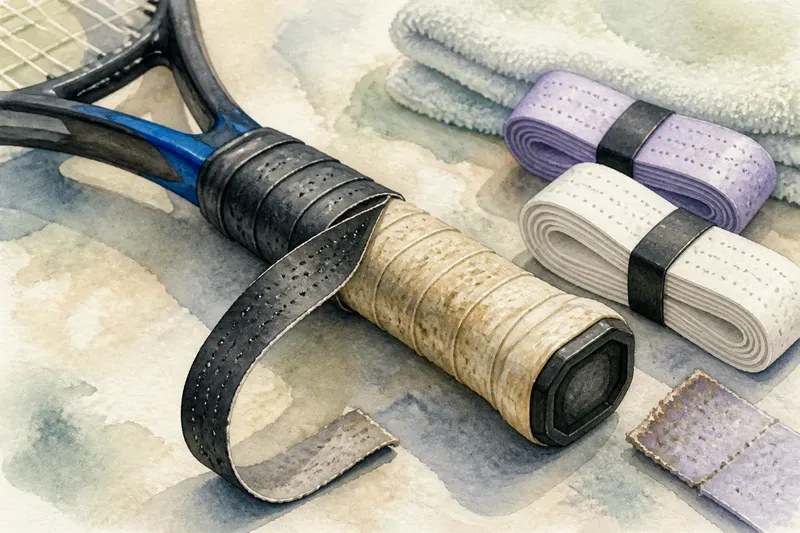
For grip concerns, keep this routine brief: note whether the handle feels secure and comfortable, then consult a racket shop if the underlying grip is loose, damaged or hard to identify. A removable top layer and the grip beneath it are different parts; detailed replacement choices belong in dedicated grip advice.
Sort balls by their next use
Set aside balls with split seams or damaged felt rather than returning them to play. Keep intact balls that still suit your needs together, and separate older balls intended for practice so they do not get mixed into your usual playing supply.
Store balls in a clean, dry container away from sharp objects. A used ball will not regain pressure simply by sitting in a sealed household tub. Follow the can’s instructions for opening and disposal, and check local options if you are looking for reuse or recycling.
Store dry equipment where it can stay aired
Once dry, put the racket in a cover or a clean bag compartment. Keep it away from abrupt heat or cold, and do not lean heavy items against its frame. A tennis bag carries kit; it is not a drying cupboard, so leave pockets and compartments open until they are aired.
Use a ventilated shelf or a clear spot near the laundry area as a landing place. Like a dish rack, it works best when items have space around them. Keep equipment out of walkways where it could be knocked over.
Check each item before packing the bag
Use this short check to decide whether an item is ready to pack, needs cleaning, or should be set aside for attention:
- Clothing and towels: Check for damp fabric. If dry, pack or put it away; if damp, hang it or place it in the laundry.
- Shoes: Check whether dirt is loose on the surface. If so, brush it off; if dirt remains, use a cleaning method suited to the shoe materials and care label.
- Racket frame: Check for cracks, loose parts or deep damage. If the frame looks sound, wipe off dust as needed; if damage could affect safe play, stop using it and ask a qualified technician to assess it.
- Handle: Check whether it feels secure and comfortable. If it does, leave it alone; if the underlying grip seems loose or damaged, ask a racket shop to inspect it.
- Balls: Check seams and felt. If a ball is intact and suits your next session, keep it with that group; if damaged, remove it from play and check local disposal or reuse options.
- Bag compartments: Check for dampness and loose debris. If dry, clear and clean, pack the equipment; if damp, empty the compartment and leave it open to air.
- Small accessories: Check wristbands, dampeners and other loose items for moisture or dirt. If clean and dry, return them to a pouch; if damp or dirty, air or clean them according to their care instructions.
Clean the bag when dirt or odour builds up
Empty the pockets and shake out loose debris. Wipe a suitable lining with a cloth rather than flooding it, then leave the zips open until every compartment is dry. Follow the care label if the bag is washable; structured panels and different materials may need a gentler method.
Brush soil from the outside before it spreads into the lining. If a seam, zip or strap is failing, ask whether it can be repaired before replacing the bag, particularly if the rest remains usable.
What should I do with tennis kit in common situations?
Can I leave tennis kit in the car overnight?
Bring it indoors when practical, since a closed bag can hold moisture against clothing and equipment. If you cannot unload it straight away, take out damp items as soon as you can.
Can I put tennis shoes in a washing machine?
Check the maker’s care instructions first because shoe materials and construction vary. Brushing off dirt and letting the shoes air is a gentler starting point; use another method only if the care guidance supports it.
Do used tennis balls belong in the bin?
Not always. Separate intact balls that remain suitable for practice or informal play from damaged ones, then check local reuse or recycling options because accepted materials differ.
When should I ask someone to inspect a racket?
Ask a qualified racket technician or retailer if you see a fresh crack, loose part or other damage that could affect safe play. Stop using the racket until it has been assessed.
How does a between-sessions routine for tennis kit prevent waste?
Make decisions after items are dry and clean enough to inspect. Dampness can change how a surface feels, while dirt can obscure its condition; airing first gives you a clearer basis for choosing between cleaning, repair and replacement.
Keep a soft brush and clean cloth near your usual unloading spot, and follow maker instructions for materials and local guidance for disposal. A few deliberate checks help you keep sound equipment in use while setting aside anything that needs proper attention.