When to Replace a Tennis Overgrip
Learn when to replace a tennis overgrip by checking for slickness, dampness, damage and poor fit, then choose a fresh wrap that suits your hand.
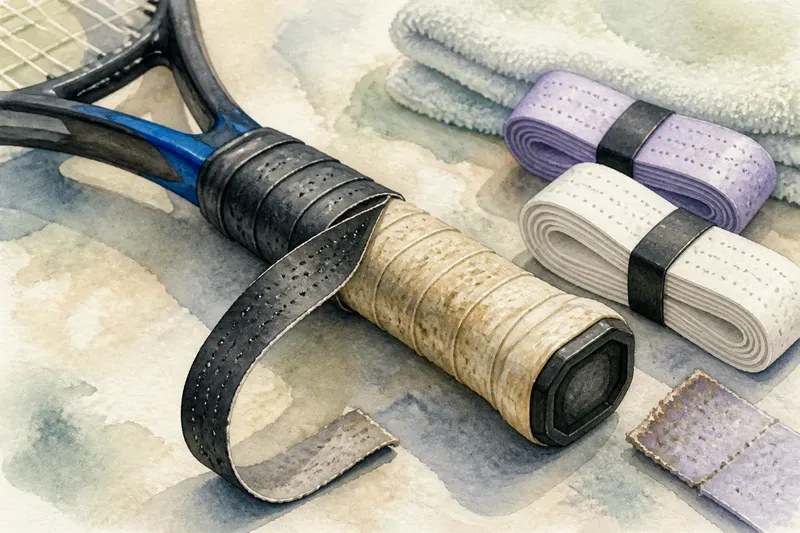
When should you replace a tennis overgrip? Replace it when the surface under your hand becomes slick, damp, uneven or uncomfortable, even if the racket’s base grip is still intact. The overgrip is a replaceable contact layer, and its condition can change how confidently you hold the racket.
Judge the wrap by its feel and condition, not by a fixed calendar. A fresh one is useful when the current layer no longer suits your hand; changing it sooner is not automatically better.
An overgrip refreshes the contact surface
The base grip covers and cushions the handle. An overgrip sits on top, giving your palm and fingers a surface that can be replaced without changing the handle underneath. Its texture and finish can affect how it feels in your hand and how it handles perspiration.
If the outer wrap is frayed or slick, replacing it may refresh the contact surface. If the handle itself feels loose, damaged or oddly shaped, another overgrip may only hide the problem. Remove the old layer and inspect the base grip before fitting a new one.
An overgrip is like a removable notebook cover: it takes the handling, while the object beneath stays in place. It cannot repair a damaged handle or correct a grip size that does not suit your hand.
A slick patch can matter before the wrap looks worn
Texture often wears down where your hand contacts the racket most. Look for a shiny strip, flattened ridges, a smooth patch near the heel of your palm or a spot that feels slippery as you adjust your hold. The rest of the wrap may still look tidy.
Appearance alone can mislead. A clean-looking grip may feel slick, while a scuffed one may still feel secure. Hold the racket as you normally would and make a gentle grip adjustment. If your fingers slide before settling, that is a more useful clue than colour or age.
Say you notice a slick patch at the heel of your hand, while the rest of the wrap remains intact. You remove the old layer, inspect the base grip, then fit a replacement with a texture you prefer. If ordinary grip adjustments feel more consistent, the worn contact area was likely the issue; if not, reassess the base grip and the new wrap’s feel.
Dampness can change the feel during a session
Perspiration can alter an overgrip’s feel. A surface that feels secure while dry may become clammy or slick as your hand warms up. Some overgrips are designed to feel absorbent; others favour a tackier surface. Neither quality suits every hand or playing condition.
Notice what happens during a normal session, not only before you play. If the grip becomes persistently slippery or stays unpleasantly damp afterwards, replace it and consider whether a different finish better matches your preference. A towel can dry your hand, but it cannot restore worn texture.
Do not leave a wet overgrip wrapped tightly against the handle. Let the racket air out in a dry place, away from direct heat, then check whether the layer has dried evenly. If it remains musty, sticky or distorted, replacing it is more sensible than trying to make the surface feel new again.
Movement and damage make the wrap harder to use
Look for a torn section, loose tail, lifted edge or overlap that has shifted. Run your fingers lightly along the wrap to find ridges or gaps that press into your palm.
A loose end may catch your fingers or move as you handle the racket. A tear can spread, and a shifted wrap can leave one section thicker than another. If the layer no longer lies flat, replace it rather than playing around the irregularity.
When you remove the old wrap, check that the base grip is secure and reasonably even. If it is peeling, crumbling or damaged, address that layer rather than hiding it beneath another wrap. Follow the fitting directions supplied with the replacement.
Comfort and control are separate clues
A grip can feel comfortable but slippery, or tacky but irritating. Ask two questions: does the surface remain comfortable, and can you hold and adjust the racket without unwanted movement? Do not judge a fresh overgrip by tack alone.
Notice pressure points, rough seams and changes in how your fingers settle around the handle. If a new wrap feels too thick, the added layer may be the issue. Remove it and consider a thinner option instead of layering another wrap on top.
If discomfort continues after changing the surface, do not tighten your hand to compensate. The base grip or handle fit may also be involved. For persistent hand pain, seek advice from a qualified clinician rather than treating a grip change as a medical fix.
Choose a replacement for the feel you prefer
Overgrips vary in thickness, texture and how they handle moisture. An absorbent, dry-feeling surface may suit you if you dislike tack; a tackier finish may feel better if you prefer a closer hold. Product descriptions are useful guides, but the feel still depends on your hand and conditions.
Start by identifying what is wrong with the current layer. If it feels slick, look for a texture or finish that offers more purchase. If it feels too sticky or rough, choose a smoother surface. If the handle already feels bulky, avoid adding another layer without considering how the total thickness affects your hold.
Colour is mostly a visual choice. Pale wraps may show dirt sooner, while dark ones can make surface wear less obvious. Let touch and condition lead your decision; appearance is a secondary clue.
Which tennis overgrip signs should guide your decision?
How often should I replace a tennis overgrip?
There is no single schedule for every player. Replace it when its texture, moisture or fit no longer feels dependable, rather than changing it simply because a set time has passed.
Can I play with a worn overgrip?
You can, but a slick or shifting surface may distract you or make normal grip adjustments feel uncertain. If it is loose, torn or uncomfortable, replace it before your next session.
Can I put a new overgrip over the old one?
That adds another layer and can make the handle feel thicker or uneven. Remove the worn wrap first so you can inspect the base grip and fit the replacement smoothly.
Does an overgrip change the handle size?
An added layer makes the handle feel thicker, with the effect depending on the product and how it is wrapped. If the racket already feels too large, another layer may make the fit less comfortable.
Make a clear decision from the signs you can feel
Hold the racket, notice whether your hand slides or catches, then inspect the contact surface for slick patches, dampness, movement and damage. Replace the tennis overgrip if its condition is getting in the way. If it still feels secure and comfortable, there is no need to change it just for a fresh appearance.
The useful question is not how long the wrap has been on the racket, but whether it still gives your hand a comfortable, predictable point of contact. Keep a spare in your kit if that suits your routine, and let the feel of the handle guide the decision.