Natural Gut or Synthetic String: What the Materials Change
Natural gut or synthetic string choices affect comfort, response and upkeep. Compare constructions clearly and choose a racket setup that suits your play.
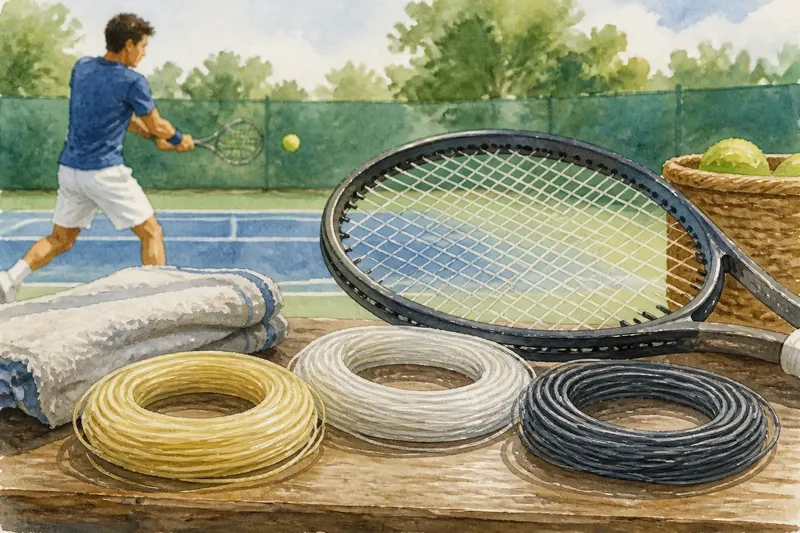
Natural gut or synthetic string: which change would you actually notice in your racket? Start with the sensation that bothers or suits you during ordinary rallies, then compare the materials by construction, feel and upkeep.
Construction separates natural gut from synthetic strings
Natural gut is made from animal intestine fibres twisted into strands. Its layered construction stretches and returns readily during impact, creating a supple, responsive feel. Gut can move against neighbouring strings and slide back into place, though dirt and moisture can interfere with that movement.
“Synthetic” covers several constructions, not one recipe. Nylon strings include solid-core designs with outer wraps and multifilaments made from many fine fibres. Polyester is generally a firmer monofilament. These differences matter more than the broad synthetic label.
Think of construction as the difference between a bundle of fine cords and one solid cord: both can be strong, but they bend and react differently. The analogy is a starting point; the precise string design and racket setup also shape the result.
Natural gut prioritises a supple, lively response
Players often choose natural gut for its yielding feel and elastic response. It may feel less harsh than a firm, low-stretch string, which can appeal if you value comfort or want a lively response on shorter swings. Wear and breakage still depend on how and where you hit, as well as playing conditions.
Gut can be costly and is more vulnerable to moisture than many synthetic options. Heavy topspin, frequent off-centre contact or rough string intersections can also shorten its useful life. A string saver or protective coating may help in some setups, but neither changes the material’s susceptibility to wear.
If you play in damp conditions, leave your racket in a wet bag or prefer low-maintenance equipment, weigh those habits before choosing gut. Its feel may suit you, but care demands can outweigh that advantage.
Synthetic strings range from soft nylon to firm polyester
A basic nylon string is a common starting point for a synthetic setup. Multifilament nylon uses many fine fibres to create a more supple response; players seeking comfort without natural gut often consider it. Its durability varies with construction and playing style.
Polyester, often called poly, is usually a firmer monofilament. Players who swing fast and create their own pace may prefer its controlled, direct response. Its stiffness can feel demanding, particularly for someone with a compact swing or sensitivity to impact. Poly can also lose tension and change feel with use, so resistance to some forms of breakage does not make it a set-and-forget choice.
“Synthetic gut” generally refers to a style of nylon construction, not actual natural gut. Read the product’s construction description when the label does not make the material clear.
Choose a string by the sensation you want to change
Start with the clearest clue from your ordinary rallies: sharp impact, strings that move and stay out of place, frequent breakage, or a response that feels too lively. Match that observation to a possible adjustment, then decide what to ask a stringer or compare at your next restring.
- Sharp impact: If routine contact feels harsh, then consider natural gut or multifilament nylon; otherwise, keep your current material and check whether another part of the setup is bothering you.
- Strings stay displaced: If strings move and do not slide back, then ask a stringer whether the construction and string intersections suit your play; otherwise, do not switch materials for this reason alone.
- Frequent breakage: If strings break often, then ask about gauge, construction and your contact pattern; otherwise, do not choose a firmer string solely to address breakage you do not experience.
- Response feels too lively: If the ball seems to leave the string bed with more response than you want, then compare a firmer option with a stringer; otherwise, do not move to polyester just because it is popular.
- Damp playing conditions: If your racket is often exposed to moisture, then choose a material and care routine you can maintain; otherwise, consider gut if its feel is your priority and you can keep it dry.
- Comfort without natural gut: If you want a yielding response but prefer a synthetic, then ask about multifilament nylon; otherwise, compare nylon constructions by their stated design rather than relying on the word “synthetic”.
A hybrid combines two string types, commonly placing one material in the mains and another in the crosses. The result depends on which string goes where and how the combination behaves in your racket. It offers a defined compromise, not every benefit without trade-offs.
What should you ask before choosing a string?
Is natural gut more comfortable than polyester?
Natural gut generally feels more elastic and yielding than a firm polyester monofilament. Comfort is personal, and your racket, tension, technique and sensitivity to impact also affect how a string bed feels.
Does synthetic gut mean natural gut?
No. “Synthetic gut” usually describes a nylon string intended to offer a versatile response; it is not made from animal intestine fibres. Check the product’s construction description if the label is unclear.
Can I use polyester if I rarely break strings?
You can consider it, but resistance to breakage is only one part of the decision. If the firmer response feels uncomfortable or affects your timing, compare a softer synthetic or a hybrid instead.
Should I try a hybrid setup?
A hybrid may suit you if you want to combine the response of one string with the feel or durability of another. Ask a stringer to explain which material would go in the mains and crosses, and keep the rest of your setup unchanged while you judge the result.
Change one string feature at a time
Say you currently use a firm polyester setup and notice a sharp sensation on routine groundstrokes. In this invented situation, you ask a stringer to install a softer multifilament while keeping the racket, tension and other setup choices unchanged. The expected observable result is a more yielding impact feel; if that sensation does not change, the material may not address the issue.
For a clear comparison, record the string name, construction, gauge, tension and restringing date. Pay attention to similar shots across sessions rather than one striking point. If you change several setup features together, it becomes harder to tell which one altered the feel.
For the search phrase natural gut or synthetic string, the useful decision is not which label wins but which trade-off matters most to you: response, comfort or upkeep. Check the construction and care information, then ask your stringer to match the option to that priority. If impact discomfort persists or concerns you, seek advice from a qualified professional.